

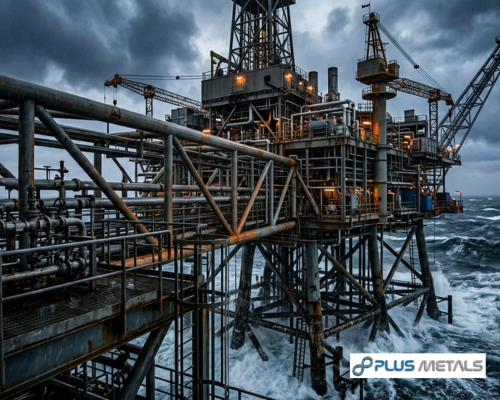
Offshore oil and gas platforms face some of the harshest environmental conditions in the world. Constant exposure to seawater, high humidity, and fluctuating temperatures makes structural integrity a major concern for marine engineers. Over time, corrosion can severely damage steel structures, pipelines, and critical components, leading to costly repairs and safety risks.
That's why choosing the right materials is crucial. Plus Metals, a leading premium metals and alloys supplier in India, specializes in providing high-quality corrosion-resistant nickel alloys for offshore structures that ensure long-lasting durability and optimal performance in marine environments.
Why Corrosion-Resistant Alloys Are Essential for Offshore Platforms
Offshore structures are constantly in contact with saltwater, which accelerates metal deterioration. Traditional steels and metals are prone to rust, pitting, and stress corrosion cracking. Using high-performance corrosion-resistant superalloys significantly reduces maintenance costs, enhances safety, and extends the service life of offshore platforms.
Nickel-based alloys, titanium alloys, and Inconel are particularly effective due to their excellent resistance to seawater corrosion and ability to withstand extreme conditions.
Corrosion protection alloys for offshore engineering are engineered to resist chemical attacks from chloride-rich seawater, biofouling, and mechanical wear. These materials maintain structural integrity even in deepwater environments where pressure and salinity are exceptionally high. Similar to how marine engineers have successfully extended equipment lifespan using specialty metals as discussed in our article on How Marine Engineers Increased Equipment Lifespan Using Specialty Metals, offshore platforms benefit tremendously from advanced alloy solutions.
Key Alloys for Offshore Structural Protection
1. Corrosion-Resistant Nickel Alloys
Nickel alloys are widely recognized for their robustness in marine applications. They offer superior resistance to pitting, crevice corrosion, and stress corrosion cracking. Corrosion-resistant nickel alloys for offshore structures are particularly suitable for components like risers, pipelines, and support frames.
Their high strength-to-weight ratio also allows for lighter, yet durable constructions, reducing installation and operational costs. Explore our comprehensive range of nickel alloy solutions designed specifically for offshore applications.
2. Titanium Ti‑6Al‑4V Alloys
Titanium alloys, especially titanium Ti‑6Al‑4V marine corrosion resistance, provide an exceptional combination of lightweight strength and corrosion resistance. They are often used in critical components such as fasteners, brackets, and heat exchangers.
Titanium's natural oxide layer protects it from saltwater degradation, ensuring that offshore platforms maintain structural integrity for decades. Our titanium alloy products meet the highest industry standards for marine applications.
3. Inconel Alloys
Inconel corrosion resistant alloy offshore platforms is a go-to solution for high-temperature and high-stress areas. Its excellent oxidation and corrosion resistance make it ideal for offshore platform components exposed to extreme conditions.
Inconel superalloys are especially effective in areas where other metals might fail due to thermal fatigue or saltwater exposure. Learn more about our Inconel alloy offerings for offshore engineering.
Advantages of Using Corrosion-Resistant Alloys
- Extended Equipment Lifespan: Using high-performance corrosion-resistant superalloys reduces structural wear and tear, extending the operational life of offshore platforms.
- Lower Maintenance Costs: With superior corrosion protection, inspections and repairs are needed less frequently.
- Enhanced Safety: Structurally sound materials minimize risks of failure, protecting personnel and the environment.
- Improved Performance: Corrosion-resistant alloys maintain mechanical properties under harsh marine conditions, ensuring reliable operations.
Real-World Applications in Offshore Engineering
Offshore platforms utilize corrosion-resistant alloys in various critical applications:
- Risers and Pipelines: Transport oil and gas from seabed to platform surface
- Support Structures: Main framework and bracing systems
- Heat Exchangers: Critical for processing and cooling systems
- Fasteners and Brackets: Essential connection components
- Subsea Equipment: Blowout preventers, wellheads, and control systems
- Deck Equipment: Cranes, winches, and processing modules
Material Selection Considerations
When selecting corrosion protection alloys for offshore engineering, several factors must be considered:
- Environmental Conditions: Water depth, temperature, salinity, and pressure
- Mechanical Requirements: Strength, fatigue resistance, and impact tolerance
- Chemical Compatibility: Resistance to specific corrosive agents
- Fabrication Requirements: Weldability, machinability, and forming characteristics
- Economic Factors: Initial cost versus long-term savings
Why Choose Plus Metals
Plus Metals is a trusted premium metals and alloys supplier in India, catering to international buyers with high-quality marine-grade alloys. Our solutions include corrosion-resistant nickel alloys for offshore structures, titanium Ti‑6Al‑4V, Inconel corrosion-resistant alloys, and other superalloys designed for extreme marine environments.
We ensure that all products meet global standards for quality, reliability, and performance. Our comprehensive offerings include:
- Certified Materials: All alloys come with complete mill test certificates and international certifications
- Technical Support: Expert guidance in material selection and application engineering
- Global Supply Chain: Efficient logistics and documentation for worldwide delivery
- Custom Solutions: Tailored alloy specifications to meet specific project requirements
- Quality Assurance: Rigorous testing and inspection protocols
Whether you are building a new offshore platform or retrofitting an existing structure, Plus Metals provides customized solutions that meet your engineering requirements. Our expert team guides you in selecting the most suitable alloys for optimal durability and cost-efficiency.
Industry Standards and Certifications
All our high-performance corrosion-resistant superalloys comply with international standards including:
- ASTM Standards: American Society for Testing and Materials specifications
- ASME Codes: American Society of Mechanical Engineers requirements
- API Standards: American Petroleum Institute specifications for offshore applications
- NORSOK Standards: Norwegian offshore industry requirements
- ISO Certifications: International Organization for Standardization compliance
Get Started with Plus Metals
Contact us today to discuss your offshore engineering project and secure alloys that prevent structural damage while maximizing safety and longevity. Our technical experts are ready to help you select the optimal corrosion protection alloys for offshore engineering that meet your specific requirements.
Email: sales@plusmetals.in
Phone: +91 91673 47029
Visit: Plus Metals
Partner with Plus Metals for reliable, high-performance alloy solutions that protect your offshore investments and ensure operational excellence in the world's most challenging marine environments.
Frequently Asked Questions (FAQ)
Q1: What makes nickel alloys suitable for offshore platforms?
Nickel alloys resist corrosion, pitting, and stress corrosion cracking caused by seawater. Their high strength-to-weight ratio makes them ideal for offshore structures, providing durability while reducing overall platform weight.
Q2: Can titanium alloys withstand extreme marine environments?
Yes. Titanium Ti‑6Al‑4V alloys provide excellent corrosion resistance and mechanical strength, making them ideal for fasteners, brackets, and critical components. Their natural oxide layer offers superior protection against saltwater degradation.
Q3: Why is Inconel used in offshore platforms?
Inconel corrosion resistant alloy offshore platforms can endure high temperatures, oxidation, and chemical exposure, ensuring reliability in extreme conditions. They're particularly effective in high-stress areas where thermal fatigue is a concern.
Q4: How do corrosion-resistant superalloys reduce maintenance costs?
These alloys resist structural damage, reducing the need for frequent inspections, repairs, and component replacement. Their extended lifespan and reliability significantly lower total cost of ownership for offshore operations.
Q5: What certifications do Plus Metals alloys carry for offshore applications?
All our alloys comply with international standards including ASTM, ASME, API, NORSOK, and ISO certifications. Each shipment includes complete mill test certificates and material traceability documentation.