

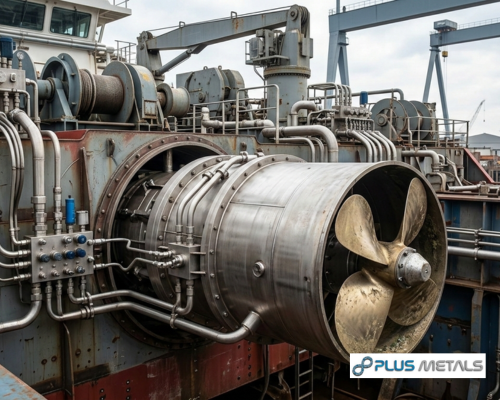
Marine environments are among the most challenging settings for any engineering equipment. Constant exposure to saltwater, extreme pressures, temperature fluctuations, and biological growth accelerates corrosion and wear. Over time, this can significantly reduce the reliability of marine vessels and offshore platforms, leading to frequent maintenance, high costs, and potential safety hazards.
To overcome these challenges, marine engineers have increasingly turned to marine corrosion-resistant specialty metals and nickel alloys for marine engineering supplied by trusted partners like Plus Metals. By selecting the right materials, engineers are now extending equipment lifespan, improving performance, and lowering life-cycle costs.
In this article, we explore how specialty metals have transformed marine engineering, why they matter, and how Plus Metals supports global projects with high-performance marine solutions.
Understanding Marine Corrosion and Its Impact
Marine corrosion is caused by the aggressive action of saltwater and dissolved ions that react with metals. Standard carbon steels and basic stainless steels can deteriorate rapidly in seawater, leading to:
- Pitting and crevice corrosion
- Structural weakness
- Equipment failure
- Increased downtime and maintenance costs
This degradation isn't just costly — it also impacts safety. For ships, offshore platforms, subsea pipelines, and port infrastructure, corrosion can compromise integrity and operational efficiency.
That's where marine corrosion-resistant specialty metals come into play.
What Are Marine Corrosion-Resistant Specialty Metals?
Marine corrosion-resistant specialty metals are engineered alloys designed to withstand harsh environments found in oceans and coastal zones. These materials offer excellent resistance to seawater attack, stress corrosion cracking, and fatigue.
Key advantages include:
- Superior corrosion resistance
- Extended service life in seawater
- High mechanical strength
- Enhanced reliability in critical marine systems
Among these materials, nickel alloys for marine engineering are particularly prominent due to their unmatched balance of durability and corrosion resistance. Learn more about our nickel alloy solutions.
Why Nickel Alloys Are the Marine Engineer's Choice
Nickel alloys are widely used in marine applications because they resist chloride attack and maintain strength at varying temperatures. These properties make them ideal for components such as:
- Propeller shafts
- Valves and pumps
- Heat exchangers
- Fasteners and fittings
- Subsea hardware
For demanding projects like offshore drilling or deep-sea exploration, engineers require materials that deliver long-term performance without frequent replacement. Nickel alloys, with their robust corrosion resistance and structural stability, significantly extend equipment lifespan compared to conventional metals. Explore our complete range of marine grade specialty alloys.
How Marine Engineers Increased Equipment Lifespan Using Specialty Metals
1. Selecting the Right Material for the Environment
Marine engineers now prioritize materials engineered for seawater exposure. Instead of generic grades, they choose alloys tailored to resist specific types of corrosion. For example:
- Nickel alloys with high nickel and chromium content resist chloride pitting.
- Exotic grades offer additional protection against biofouling and erosion.
This thoughtful selection leads to components that last longer and perform better.
2. Partnering with Expert Suppliers
Working with a Premium Metals & Alloys Supplier India like Plus Metals ensures engineers have access to world-class materials with certified quality. Accurate certification and traceability mean engineers can trust the performance of the metal before installation.
Suppliers like Plus Metals help with:
- Material selection support
- Quality assurance
- Timely deliveries
- Global logistics
This partnership allows engineers to focus on project execution rather than material risk.
3. Improving Manufacturing Practices
Modern manufacturing techniques like precision forging, controlled heat treatment, and advanced machining enhance the integrity of marine alloy components. By using high-quality specialty metals, engineers reduce defects and prolong the service life of equipment.
4. Reducing Maintenance Frequency
With superior corrosion resistance, specialty metals eliminate frequent maintenance stops. This improvement not only saves time and money but also enhances operational uptime — a major advantage in commercial shipping and offshore operations.
5. Sustainable Life-Cycle Benefits
Longer equipment lifespan means fewer replacements, less waste, and more sustainable operations. Marine engineers are now balancing performance with environmental responsibility, and specialty metals support both goals.
Plus Metals Marine Alloy Solutions
As a trusted Premium Metals & Alloys Supplier India, Plus Metals provides a comprehensive range of high performance marine grade alloys, including:
- High nickel alloys (e.g., alloys with excellent seawater resistance)
- Specialty stainless steels
- Exotics metal solutions
- Custom precision grades for specialized equipment
Engineers worldwide rely on Plus Metals for consistent quality, competitive pricing, and responsive service. Whether it's a global shipping fleet or an offshore energy project, Plus Metals delivers the metals needed to increase equipment lifespan and performance. Contact our experts at Plus Metals for personalized material recommendations.
Strong Call To Action
Are you looking to improve the durability and performance of your marine equipment? Partner with Plus Metals – Premium Metals & Alloys Supplier India for world-class marine corrosion-resistant specialty metals and nickel alloys for marine engineering.
Email: sales@plusmetalsalloys.com
Phone: +91 91673 47029
Website: Plus Metals
Let our experts help you select the right alloys to extend service life and optimize performance.
Frequently Asked Questions (FAQ)
Q1: What makes specialty metals better for marine use than regular steel?
Specialty metals like high nickel alloys resist corrosive seawater, reduce maintenance, and significantly increase equipment lifespan compared to standard steel.
Q2: Are marine specialty metals costly?
The upfront cost may be higher, but improved lifespan and lower maintenance costs provide excellent value over time.
Q3: Which nickel alloys are best for marine engineering?
Alloys with high nickel, chromium, and molybdenum offer superior corrosion resistance, such as Monel, Inconel, and other marine-grade nickel-based alloys.
Q4: Does Plus Metals ship internationally?
Yes, Plus Metals ships marine grade specialty metals globally with full documentation and quality certification.