

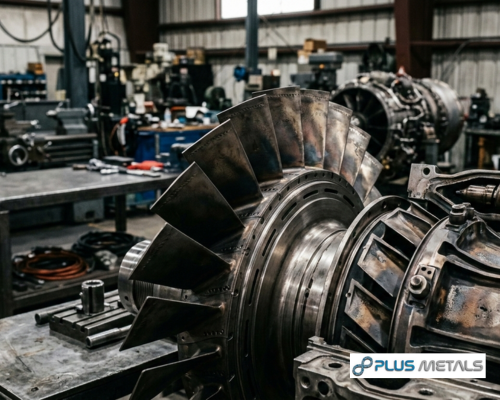
The aviation industry demands materials that can withstand extreme conditions while maintaining performance and reliability. Aircraft engines, especially jet engines, operate at very high temperatures and pressures. This environment requires materials that offer excellent strength, thermal stability, and resistance to oxidation and corrosion. At Plus Metals, we specialize in providing high-temperature aerospace superalloys applications that meet these stringent requirements for international buyers.
Why High-Temperature Alloys Matter in Aircraft Engines
Aircraft engines face extreme stress, including continuous high-speed rotation, thermal cycling, and exposure to corrosive gases. Components like turbine blades, discs, and combustion chambers require alloys that can perform under these harsh conditions. Nickel alloy aircraft engine components are widely used because of their remarkable combination of mechanical strength, heat resistance, and durability. Selecting the right alloy material directly affects engine efficiency, safety, and lifespan.
Similar to how marine engineers have successfully extended equipment lifespan using specialty metals as discussed in our article on How Marine Engineers Increased Equipment Lifespan Using Specialty Metals, aircraft engines benefit tremendously from advanced alloy solutions.
Key Applications of High-Temperature Alloys
- Turbine Blades and Discs: Turbine blades operate at temperatures exceeding 1000°C. Materials such as nickel-based and cobalt-nickel alloys are essential to maintain blade shape and integrity. Our turbine blade alloy materials are designed to withstand these temperatures while offering excellent fatigue resistance.
- Combustion Chambers: Combustion chambers experience both high temperatures and corrosive gases. High-temperature aerospace superalloys applications help maintain structural stability and prevent oxidation damage over prolonged use.
- Jet Engine Shafts and Fasteners: Shafts and fasteners in engines require strength and precision under extreme loads. Nickel alloy aircraft engine components provide the necessary mechanical properties without compromising on heat resistance.
- Exhaust and Turbine Casings: Exhaust systems are exposed to both high heat and oxidative gases. Cobalt-nickel alloy engine performance ensures durability and long-term reliability in these demanding environments.
Why Choose Plus Metals as Your Aerospace Alloy Supplier
As a leading aerospace high-temp alloy supplier in India, Plus Metals offers international buyers access to certified nickel-based, cobalt-nickel, and superalloys suitable for aircraft engine components. Here's why our clients trust us:
- Premium Quality Materials: Every batch undergoes rigorous testing for chemical composition, mechanical properties, and thermal stability.
- Customized Solutions: We provide alloys tailored to specific engine requirements, including unique grades for turbine blades and combustion chambers.
- Global Supply Capability: We ensure timely delivery to international buyers, supporting large-scale aerospace projects.
- Technical Expertise: Our team assists in material selection, offering insights into the best alloys for durability, corrosion resistance, and high-temperature performance.
By leveraging our cobalt-nickel alloy engine performance, aircraft manufacturers can reduce downtime, improve fuel efficiency, and extend engine life. Our commitment to quality ensures that high-temperature aerospace superalloys applications meet global aerospace standards.
How Our Alloys Improve Aircraft Engine Performance
The use of premium nickel alloy aircraft engine components enhances the efficiency and reliability of engines. Turbine blades maintain shape under stress, combustion chambers resist corrosion, and shafts sustain extreme loads without deformation. Using the right turbine blade alloy materials improves overall engine performance, reduces maintenance costs, and ensures passenger safety.
Our solutions also focus on future-proofing engines for next-generation aircraft, where higher operating temperatures demand superior materials. By selecting high-temperature aerospace superalloys applications from Plus Metals, manufacturers gain a competitive edge with components that last longer and perform better.
Real-World Applications in Aircraft Engines
Aircraft engines utilize high-temperature alloys in various critical applications:
- Turbine Components: Blades, rotors, and casings for power generation
- Heat Exchangers: Critical for thermal management in engine systems
- Combustion Systems: Chambers, liners, and fuel injection components
- Exhaust Systems: Nozzles, ducts, and afterburner components
- Fasteners and Brackets: Essential connection components for high-stress areas
- Compressor Components: Blades, vanes, and housing systems
Material Selection Considerations
When selecting turbine blade alloy materials and other engine components, several factors must be considered:
- Operating Conditions: Temperature, pressure, and rotational speed requirements
- Mechanical Requirements: Strength, fatigue resistance, and creep tolerance
- Chemical Compatibility: Resistance to oxidation and hot corrosion
- Fabrication Requirements: Castability, weldability, and machining characteristics
- Economic Factors: Initial cost versus long-term performance benefits
Comprehensive Alloy Solutions
Our comprehensive offerings include:
- Certified Materials: All alloys come with complete mill test certificates and international aerospace certifications
- Technical Support: Expert guidance in material selection and application engineering for aircraft engines
- Global Supply Chain: Efficient logistics and documentation for worldwide aerospace delivery
- Custom Solutions: Tailored alloy specifications to meet specific aircraft engine requirements
- Quality Assurance: Rigorous testing and inspection protocols meeting aerospace standards
Our team works closely with aerospace manufacturers to identify the right nickel alloy solutions and titanium components for their engine applications, ensuring optimal performance and return on investment.
Industry Standards and Certifications
All our high-temperature aerospace superalloys applications comply with international standards including:
- ASTM Standards: American Society for Testing and Materials specifications for aerospace alloys
- ASME Codes: American Society of Mechanical Engineers requirements for engine components
- AMS Standards: Aerospace Material Specifications for aircraft engine applications
- ISO Certifications: International Organization for Standardization compliance for aerospace
- NADCAP Certification: National Aerospace and Defense Contractors Accreditation Program standards
Ready to Upgrade Your Aircraft Engine Components?
Ensure your aerospace projects use the most reliable high-temperature alloys. Contact Plus Metals today for premium nickel and cobalt-nickel alloys that meet international aerospace standards.
Email: sales@plusmetals.in
Phone: +91 91673 47029
Visit: Plus Metals
Choose Plus Metals where superior high-temperature aerospace superalloys applications meet world-class engineering standards.
Frequently Asked Questions (FAQ)
Q1: What types of high-temperature alloys are available for aircraft engines?
Plus Metals supplies nickel-based superalloys, cobalt-nickel alloys, and specialty high-temperature alloys suitable for turbine blades, combustion chambers, and other engine components.
Q2: Can Plus Metals supply alloys for international aerospace projects?
Yes, we are a trusted aerospace high-temp alloy supplier in India and cater to international buyers with global shipping and certified quality assurance.
Q3: How do high-temperature alloys improve engine performance?
They provide exceptional thermal stability, corrosion resistance, and mechanical strength, ensuring turbine blades, shafts, and casings maintain integrity at extreme temperatures.
Q4: Do you offer technical support for material selection?
Absolutely. Our experts guide international buyers in selecting the right nickel alloy aircraft engine components and turbine blade alloy materials for optimal engine efficiency.
Q5: What certifications do your aerospace alloys carry?
All our alloys comply with international standards including ASTM, ASME, AMS, ISO, and NADCAP certifications. Each shipment includes complete mill test certificates and material traceability documentation for aerospace applications.