

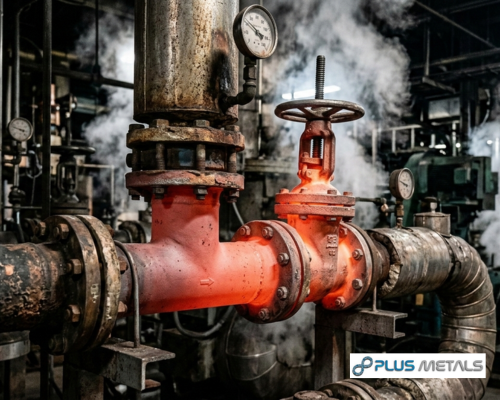
Boilers are the heart of industrial operations, from power plants to chemical factories. They operate under extreme conditions — high temperature, pressure, and corrosive environments — which can rapidly degrade components if the right materials are not used. Extending the life of boiler components is not just a matter of cost-saving; it is crucial for operational safety and reliability. This is where heat-resistant alloys for boilers play a transformative role.
Why Boiler Components Fail
Boiler tubes, headers, and superheater elements are continuously exposed to high heat and pressure. Over time, this leads to:
- Creep: Slow deformation under prolonged stress and high temperature
- Oxidation and Corrosion: Surface damage caused by chemical reactions with steam or fuel impurities
- Thermal Fatigue: Cracking due to repeated heating and cooling cycles
- Erosion: Material loss from high-velocity steam and particulate matter
Traditional carbon steel or low-alloy steels may fail prematurely under such conditions, leading to costly repairs, unscheduled downtime, and even safety hazards.
Similar to how marine engineers have successfully extended equipment lifespan using specialty metals as discussed in our article on How Marine Engineers Increased Equipment Lifespan Using Specialty Metals, boiler applications benefit tremendously from advanced alloy solutions.
Role of Heat-Resistant Alloys
Heat-resistant alloys for boilers are engineered to withstand these extreme conditions. They combine superior mechanical strength with excellent oxidation and corrosion resistance. Nickel-based alloys, like Inconel, and specialized superalloys are widely preferred for boiler components because they maintain their integrity even at very high temperatures.
Nickel-Based Alloys for Boiler Components
Nickel-based alloys boiler components are excellent for high-temperature applications. They resist oxidation and corrosion while retaining tensile strength under prolonged heat exposure. These alloys are perfect for superheater tubes, furnace walls, and high-pressure boiler components. Using nickel-based alloys in boilers can reduce maintenance frequency and extend operational life significantly.
Key advantages of nickel-based alloys boiler components include:
- Superior high-temperature strength retention
- Excellent oxidation resistance in steam environments
- Resistance to stress corrosion cracking
- Good thermal shock resistance
- Extended service life under extreme conditions
Our comprehensive range of nickel alloy solutions includes grades specifically designed for boiler applications, offering superior performance in high-temperature environments.
Inconel High Temperature Resistance
Inconel high temperature resistance makes it a family of nickel-chromium-based superalloys known for exceptional high-temperature performance. Components made with Inconel maintain structural stability even beyond 1000°C. They resist creep and fatigue, making them ideal for power generation boilers where reliability is non-negotiable.
Specific Inconel grades for boiler applications include:
- Inconel 600: Excellent for superheater and reheater tubes
- Inconel 625: Superior corrosion resistance in aggressive environments
- Inconel 690: Enhanced resistance to primary water stress corrosion cracking
- Inconel 718: High strength and creep resistance for critical components
Creep-Resistance Materials
Creep is one of the most critical factors in boiler component degradation. Boiler creep-resistance materials are designed to resist elongation and deformation under high stress and temperature. Alloys like Inconel 600, Inconel 625, and other nickel-chromium superalloys are engineered specifically to counter creep, ensuring long-term reliability.
Characteristics of effective boiler creep-resistance materials:
- High creep rupture strength at operating temperatures
- Stable microstructure under prolonged exposure
- Resistance to grain boundary degradation
- Minimal dimensional changes over time
Long-Lasting Boiler Superalloys
Superalloys are formulated for the most demanding environments. They combine corrosion resistance, creep resistance, and mechanical strength in one material, making them long-lasting boiler superalloys. Using these advanced materials reduces downtime, improves efficiency, and significantly extends the life of boiler components.
Common long-lasting boiler superalloys include:
- Incoloy 800/800H: Excellent creep resistance for high-temperature service
- Hastelloy X: Outstanding oxidation resistance in high-temperature environments
- Haynes 230: Superior thermal stability and fabricability
- Nimonic alloys: High-strength applications in gas turbines and boilers
Benefits of Using Heat-Resistant Alloys in Boilers
The advantages of implementing heat-resistant alloys for boilers are substantial:
- Extended Component Life: Reduced frequency of replacements and maintenance
- Higher Efficiency: Stable performance at elevated temperatures improves heat transfer and energy efficiency
- Operational Safety: Minimizes risks of component failure, reducing chances of accidents
- Cost Savings: Less frequent downtime and repairs save operational costs in the long term
- Improved Reliability: Consistent performance under varying load conditions
- Environmental Benefits: Better efficiency reduces fuel consumption and emissions
Key Applications in Boiler Systems
Heat-resistant alloys are utilized in various critical boiler applications:
- Superheater Tubes: High-temperature steam generation components
- Reheater Sections: Steam temperature enhancement systems
- Furnace Walls: High-temperature containment structures
- Headers and Manifolds: Steam distribution and collection systems
- Economizer Tubes: Heat recovery and efficiency improvement components
- Steam Piping: High-pressure steam transport systems
Choosing the Right Alloy
Selecting the right material for your boiler depends on operational temperature, pressure, and environmental conditions. Our expert team helps international buyers choose the most suitable long-lasting boiler superalloys to maximize performance and component life.
Factors to consider when selecting boiler alloys:
- Operating Temperature Range: Maximum and sustained temperature requirements
- Pressure Conditions: Working pressure and pressure cycling
- Environmental Factors: Steam quality, fuel type, and combustion products
- Mechanical Requirements: Strength, creep resistance, and fatigue tolerance
- Fabrication Needs: Weldability, formability, and machining characteristics
- Economic Considerations: Initial cost versus lifecycle benefits
Commonly Used Alloys
At Plus Metals, we supply premium nickel-based alloys for boiler components that meet international quality standards. Our heat-resistant superalloys, including Inconel and other nickel-chromium alloys, ensure that your boilers run efficiently under the most extreme conditions.
- Inconel 600 & 625: High temperature and corrosion resistance
- Incoloy 800: Excellent creep resistance
- Hastelloy X: Oxidation-resistant for high-temperature boiler environments
- Haynes 230: Superior thermal stability and long-term reliability
Why Choose Plus Metals as Your Premium Metals Supplier India?
As a leading premium metals supplier India, Plus Metals provides comprehensive solutions for boiler applications worldwide. Our expertise in heat-resistant alloys for boilers ensures optimal performance and reliability.
Comprehensive Boiler Alloy Solutions
Our comprehensive offerings include:
- Certified Materials: All alloys come with complete mill test certificates and international certifications
- Technical Support: Expert guidance in material selection and application engineering for boiler systems
- Global Supply Chain: Efficient logistics and documentation for worldwide delivery
- Custom Solutions: Tailored alloy specifications to meet specific boiler requirements
- Quality Assurance: Rigorous testing and inspection protocols meeting power industry standards
Our team works closely with power plant engineers to identify the right nickel alloy solutions for their boiler applications, ensuring optimal performance and return on investment.
Industry Standards and Certifications
All our heat-resistant alloys for boilers comply with international standards including:
- ASTM Standards: American Society for Testing and Materials specifications for boiler applications
- ASME Codes: American Society of Mechanical Engineers requirements for pressure vessels and boilers
- ISO Certifications: International Organization for Standardization compliance
- EN Standards: European standards for power generation equipment
- JIS Standards: Japanese Industrial Standards for high-temperature alloys
Take Action Now
Extend the life of your boiler components and enhance operational reliability with Plus Metals' premium heat-resistant alloys. Our international clients benefit from high-quality nickel-based superalloys, including Inconel and other boiler creep-resistant materials, tailored to extreme industrial conditions.
Contact us today to discuss your requirements and get a customized solution:
Email: sales@plusmetals.in
Phone: +91 91673 47029
Visit: Plus Metals
Upgrade your boilers with materials engineered to last — reduce downtime, improve efficiency, and secure your investment.
Frequently Asked Questions (FAQ)
Q1: What makes nickel-based alloys ideal for boiler components?
Nickel-based alloys retain strength and resist oxidation at high temperatures, making them ideal for superheaters, furnace walls, and other critical components.
Q2: How do heat-resistant alloys improve boiler safety?
By resisting creep and fatigue under extreme temperatures, these alloys reduce the risk of unexpected component failure, enhancing operational safety.
Q3: Can these alloys be used in both power plants and chemical plants?
Yes, our superalloys are designed for all high-temperature industrial applications, including power generation and chemical processing boilers.
Q4: How does Inconel resist thermal degradation?
Inconel's nickel-chromium composition forms a protective oxide layer at high temperatures, preventing oxidation and maintaining mechanical strength.
Q5: How long can boiler components last with these alloys?
With proper alloy selection, maintenance, and operational practices, boiler components can last significantly longer — often several years beyond standard steel components.