

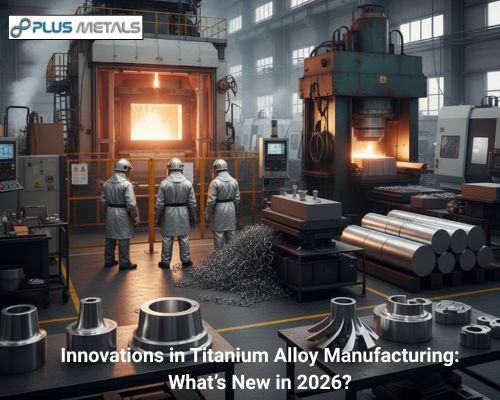
Titanium alloys have always been known for their strength, lightweight structure, and resistance to heat and corrosion. In recent years, new technologies have pushed the boundaries of how titanium alloys are made and used. As industries demand materials that are stronger, lighter, and more sustainable, manufacturers are working with advanced methods to meet these expectations. In 2026, several exciting changes are transforming the titanium industry. This blog from Plus Metals explores the latest updates and how these innovations are shaping the future of engineering, manufacturing, and global supply chains.
Key Trends Shaping Innovations in Titanium Alloy Manufacturing: What’s New in 2026?
In 2026, the titanium manufacturing sector is focused on three major goals: better performance, reduced costs, and sustainable processes. Companies are adopting smarter and cleaner technologies, making titanium more accessible and more efficient for industries such as aerospace, medical devices, automotive, defense, marine, and energy.
To explore a wide range of titanium grades, you can also check Plus Metals Titanium Alloy Products
here: Titanium Alloys – Plus Metals
Additive Manufacturing Revolution
Additive manufacturing, also known as 3D printing, continues to grow rapidly. In 2026, new high-precision printers and improved titanium powders are allowing manufacturers to create complex shapes with very little waste. This process is especially useful for aerospace components and medical implants, where accuracy and performance are critical.
Benefits of new additive manufacturing technologies:
- Lower material waste
- Faster production cycles
- Ability to produce lightweight designs
- Custom shapes that were impossible with traditional methods
- Better surface finish and improved structural strength
Aerospace companies are now printing engine parts, brackets, and structural components that are lighter and more fuel-efficient. Hospitals and medical device makers are using 3D-printed titanium implants designed to fit the patient perfectly.
Advanced Alloy Compositions Leading the Transformation
Another major innovation is the development of new titanium alloy compositions. Manufacturers are experimenting with elements like niobium, tantalum, and zirconium to create alloys with better heat resistance, corrosion resistance, and flexibility.
Why 2026 alloy compositions stand out:
- Improved fatigue performance
- Higher strength-to-weight ratio
- Better performance in high-temperature environments
- Lower risk of corrosion in marine and chemical industries
These new compositions are especially valuable in industries such as offshore engineering, defense, and renewable energy.
Sustainable Production – A New Standard for 2026
Eco-friendly production methods are now a key priority. Titanium production traditionally uses a lot of energy, but 2026 brings major improvements.
Sustainability innovations include:
- Recycling scrap titanium into new alloys
- Using renewable energy in smelting and forging
- Reducing carbon emissions with energy-efficient furnaces
- Cleaner extraction and ore-refining technologies
These steps not only protect the environment but also reduce manufacturing costs, making titanium more affordable across industries.
How Plus Metals Supports Market Demand in 2026
Plus Metals continues to supply high-quality titanium alloys to meet global industry needs. With a strong network of manufacturers adopting the latest technologies, the company ensures customers receive products that meet international standards for strength, accuracy, and durability.
You can view the full range of Titanium Sheets, Bars, Pipes, Plates and more here: Titanium Alloy Products – Plus Metals
Plus Metals provides:
- Titanium Round Bars
- Titanium Sheets & Plates
- Titanium Pipes & Tubes
- Titanium Fasteners
- Aerospace-grade alloys
- Medical-grade titanium materials
Whether you need materials for aerospace, engineering, medical devices, or automotive projects, Plus Metals brings you the latest innovations in titanium alloy manufacturing.
Why Innovations in Titanium Alloy Manufacturing: What’s New in 2026? Matter to Every Industry
The global move toward lighter, stronger, and more sustainable products means titanium will continue to grow in demand. As new technologies enter the market, the efficiency and capabilities of titanium alloys improve, opening the door to new applications and more competitive pricing.
In short, 2026 is a major turning point. With advanced alloy compositions, AI-driven systems, additive manufacturing, and sustainable production, titanium alloy manufacturing is becoming more reliable, more efficient, and more accessible than ever before.
Frequently Asked Questions (FAQs)
1. What makes titanium alloys better in 2026 compared to earlier years?
New manufacturing technologies like 3D printing, advanced alloy compositions, and AI-based quality control make titanium alloys stronger, lighter, and more efficient.
2. Are the new titanium alloys more affordable?
Yes. Sustainable production methods and automation have reduced overall manufacturing costs.
3. Which industries benefit most from these innovations?
Aerospace, medical, automotive, marine, defense, and renewable energy industries.
4. Does Plus Metals supply titanium alloys based on these new technologies?
Yes. Plus Metals offers titanium products sourced from manufacturers using the latest global innovations and quality standards.
5. Where can I explore different titanium alloy grades?
You can check the complete range here:
Plus Metals Titanium Alloy Range