

Introduction
In energy operations, material failure can quickly become costly, especially when equipment is exposed to heat, pressure, moisture, salts, and aggressive chemicals. That is why many engineers look for a corrosion resistant nickel alloy that can deliver dependable performance in demanding service conditions. Plus Metals, a Mumbai-based supplier of high-performance metals and specialty alloys, supports such industries with nickel-based materials designed for industrial reliability.
This case study explores how Inconel 945X Nickel Alloy can strengthen corrosion protection in energy environments and why it is a valuable choice for critical applications. The focus is on practical performance, durability, and long-term operating efficiency.
Energy Industry Challenge
Energy plants, offshore systems, refineries, and processing units often face severe corrosion mechanisms such as pitting, crevice attack, oxidation, and stress-related deterioration. These problems are especially serious in systems handling seawater, sour gas, condensate, and high-temperature process streams. In such environments, standard steels may lose service life too quickly, increasing maintenance costs and downtime.
For this reason, engineers often choose nickel alloys that can perform under harsh chemical exposure. Nickel-based materials are widely recognized for their ability to resist corrosive industrial atmospheres and demanding processing conditions. This makes them well suited for components used in the oil, gas, power, and energy sectors.
Why Inconel 945X Works
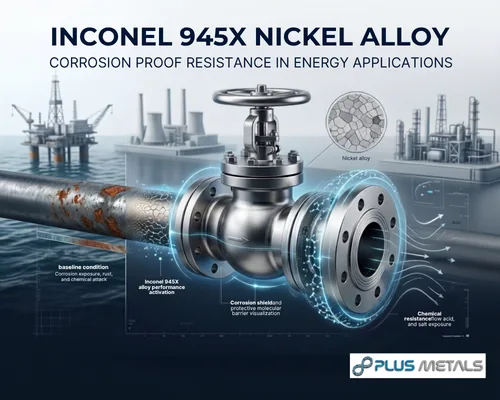
Inconel 945X Corrosion Resistance is especially valuable when equipment must withstand aggressive operating conditions for long periods. As a nickel alloy, it offers the kind of metallurgical stability needed in high-stress energy environments. Its strength lies in balancing structural integrity with resistance to chemical attack, which helps extend the life of critical parts.
In practical terms, Inconel 945X for Energy Applications can support valves, piping systems, heat-exposed assemblies, connectors, and other components where corrosion control is essential. For buyers looking for a dependable Nickel Alloy for Oil and Gas Industry use, this type of alloy supports safer performance and fewer unplanned repairs.
Plus Metals Advantage
Plus Metals is positioned as a supplier of special-purpose metals and alloys with expertise in nickel-based materials, high-temperature alloys, titanium alloys, and expansion alloys. The company also presents itself as a supplier serving industrial users who need precision cutting, deburring, and distribution support from its Mumbai facility. That matters because high-performance alloys are only part of the solution; reliable sourcing and processing are equally important.
For procurement teams, working with Plus Metals means access to a supplier that understands technical material requirements and industrial delivery expectations. This is especially useful when selecting advanced grades for corrosive environments where material quality directly affects performance.
Application Results
In a typical energy-use scenario, the adoption of a nickel alloy like Inconel 945X can improve resistance to chemical degradation and reduce the frequency of replacement cycles. Better corrosion performance often translates into more stable uptime, lower maintenance exposure, and improved equipment confidence. Over time, this supports operational continuity in highly demanding assets.
A related material often discussed in high-temperature service is Inconel X750 Nickel Alloy, which is also known for strength and performance in elevated-temperature conditions. While each nickel alloy serves a distinct engineering need, both reflect the value of advanced nickel metallurgy in energy systems. For companies evaluating long-life performance materials, this family of alloys offers strong technical relevance. You can also explore Incoloy 945 Nickel Alloy for demanding oil and gas applications.
Why It Matters
Selecting the right alloy is not only a material decision but also a business decision. When the wrong material fails early, the cost can include shutdowns, safety risk, product loss, and emergency repair work. Using a Corrosion Resistant Nickel Alloy helps reduce those risks and supports better lifecycle value.
For energy-sector buyers, the key advantage of Inconel 945X Nickel Alloy is its ability to address corrosion challenges without compromising operational reliability. That is why it has strong potential in plants that need materials capable of surviving both chemical exposure and mechanical stress.
Contact Plus Metals for Inconel 945X Nickel Alloy
For Inconel 945X Nickel Alloy and other corrosion resistant nickel alloys requirements globally, partner with Plus Metals—the trusted source for high-performance materials:
Email: sales@plusmetals.in
Call / WhatsApp: +91 91673 47029
Website: www.plusmetals.in
Message them today to discuss your requirements. They understand international standards and project timelines, delivering trust, quality, and long-term performance.
Frequently Asked Questions (FAQs)
Q1: What is Inconel 945X Nickel Alloy used for?
It is used in demanding environments where corrosion, heat, and mechanical stress are major concerns, especially in energy and industrial applications.
Q2: Why is Inconel 945X suitable for energy applications?
It offers strong corrosion performance and durability, which helps equipment last longer in harsh operating conditions.
Q3: Is Inconel 945X a corrosion resistant nickel alloy?
Yes, it is positioned as a corrosion resistant nickel alloy for severe service environments where protection against chemical attack is important.
Q4: How does Plus Metals support buyers?
Plus Metals supplies specialty metals and alloys from Mumbai and supports industrial users with distribution and processing services.
Q5: What is the difference between Inconel 945X and Inconel X750 Nickel Alloy?
Both are high-performance nickel alloys, but they are selected for different service needs depending on temperature, corrosion exposure, and mechanical requirements.