

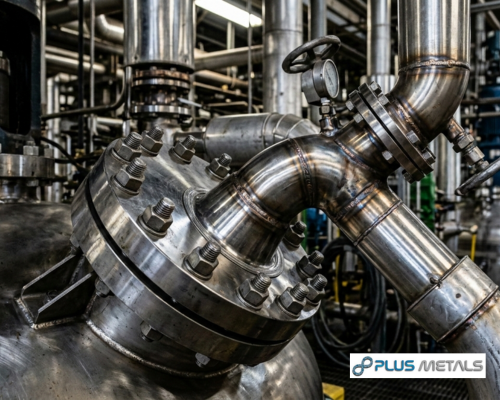
In the chemical processing world, reactor failures due to corrosion are not just costly — they can disrupt production, threaten safety, and reduce equipment life significantly. Over the years, engineers found that conventional materials like carbon steel or basic stainless steels couldn't withstand aggressive chemical environments, especially at high temperatures or in acidic media. The real breakthrough came with corrosion‑resistant alloys solutions that transformed the reliability and performance of chemical reactors around the globe.
At Plus Metals & Alloys Supplier India, we supply advanced alloys that protect reactors and critical components from premature failure. These solutions are vital in industries such as petrochemical, pharmaceutical, specialty chemical, and refinery sectors where corrosive attacks are common and severe.
What Causes Chemical Reactor Failures?
Chemical reactors operate under extreme conditions — high temperatures, pressure, and exposure to acids, alkalis, oxidizing agents, and organic chemicals. In such conditions, ordinary metals quickly deteriorate through:
- Pitting and crevice corrosion
- Stress corrosion cracking
- Oxidation at elevated temperatures
- General metal erosion
This corrosion not only weakens the reactor walls but also causes leaks, contamination of products, and even catastrophic failures.
Why Corrosion‑Resistant Alloys Matter
To prevent these issues, manufacturers turned to specialty alloys with superior chemical stability. Corrosion‑resistant alloys solutions are engineered with elements like nickel, chromium, molybdenum, and sometimes cobalt. These elements form stable protective films on the metal surface, greatly slowing down reactions that cause decay. Nickel‑based alloys are especially effective because nickel itself has strong corrosion resistance and excellent high‑temperature performance.
Nickel Alloy Corrosion Protection for Reactor Integrity
One of the most reliable strategies to safeguard reactors is through nickel alloy corrosion protection. Nickel alloys resist both oxidizing and reducing environments, including acids and chlorides that fast‑track degradation in ordinary materials. In many industrial settings, nickel alloys outperform traditional stainless steels and deliver longer asset life with fewer shutdowns.
Alloys rich in nickel, like Inconel and Monel, offer exceptional strength and chemical resistance even when exposed to high temperatures. Their ability to withstand corrosion over extended service periods makes them ideal for heat exchangers, piping, and reactor internals where failure is simply not an option.
Inconel 718: A Solution for Corrosion and High‑Temperature Stress
Among nickel‑based alloys, Inconel 718 chemical reactor corrosion resistance is a standout. This superalloy combines high nickel content with chromium, niobium, and molybdenum to resist oxidation and maintain strength up to about 700°C. Its performance is unmatched in areas that experience both chemical attack and thermal stress.
Reactors lined or constructed with Inconel 718 can operate continuously without metal thinning or stress‑induced cracking that would otherwise require frequent maintenance. This reliability reduces downtime and extends equipment life, delivering better ROI for plant operators.
Beyond Inconel: High Temp Corrosion‑Resistant Materials
For environments where both high heat and corrosive chemicals coexist, specialized high temp corrosion‑resistant materials become essential. These materials are designed to maintain mechanical integrity and corrosion resistance at elevated temperatures — often where reactions are most aggressive.
Materials like Alloy 600, Alloy 625, and even premium grades of Hastelloy are crafted to form protective oxides that slow down corrosive processes and resist deformation under stress. These alloys support continuous operation in processes like hydrocarbon reforming, polymerisation, sulfuric acid production, and more.
Elgiloy Alloy Corrosion Resistance: Precision and Performance
Another high‑performance option is Elgiloy alloy corrosion resistance. Elgiloy is a cobalt‑chromium‑nickel alloy known for superb resistance to sulfide stress corrosion cracking and pitting. It holds up well in tough chemical environments and can operate effectively at temperatures nearing 450°C. This makes it useful for springs, fasteners, and control cables in chemical equipment where precision and longevity are critical.
Real‑World Benefits
Switching to corrosion‑resistant alloys provides measurable advantages:
- Longer reactor service life
- Reduced maintenance and replacement costs
- Higher safety margins against leaks and failures
- Greater operational uptime
- Improved process purity and product quality
Instead of replacing corroded parts yearly, plants equipped with proper alloys enjoy multi‑year durability, even under the most aggressive conditions.
Why Choose Plus Metals & Alloys Supplier India?
At Plus Metals & Alloys, we specialize in supplying premium corrosion‑resistant alloys tailored for chemical processing industries worldwide. Our global buyers trust us for high‑quality, certified materials, expert guidance, and customized supply solutions. Whether you need nickel alloy corrosion protection, Inconel 718 chemical reactor corrosion solutions, or high temp corrosion‑resistant materials like Elgiloy, we deliver excellence every time.
Contact us today to choose the best alloy for your reactor needs.
Email: sales@plusmetals.in
Phone: +91 91673 47029
Visit: Plus Metals
Partner with Plus Metals for reliable, high-performance alloy solutions that enhance your chemical processing investments and ensure operational excellence in the world's most demanding chemical environments.
Frequently Asked Questions (FAQ)
Q1: What makes corrosion‑resistant alloys better than stainless steel?
Corrosion‑resistant alloys contain higher percentages of nickel, chromium, and molybdenum, which create stronger passive layers that protect against both oxidative and reductive corrosion beyond what stainless steels can endure.
Q2: Can these alloys handle extremely high temperatures?
Yes, alloys like Inconel 718 and other superalloys maintain both strength and corrosion resistance at temperatures up to 700°C or more, making them ideal for high heat applications.
Q3: Are corrosion‑resistant alloys cost‑effective?
Though initial costs are higher than ordinary metals, the longevity, low maintenance, and reduced downtime make them more economical over the lifecycle of equipment.
Q4: How do I choose the right alloy for my reactor?
Contact a supplier like Plus Metals & Alloys to analyze your operating conditions — temperature, chemicals, and pressure — so we can recommend the best material grade for optimum corrosion resistance.