

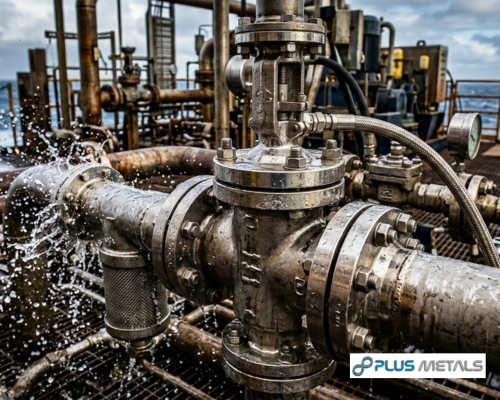
Saltwater is one of the toughest environments for metals. Marine equipment constantly faces the corrosive power of seawater, which can weaken parts, reduce lifespan, and raise maintenance costs. At Plus Metals, a leading Premium Metals & Alloys Supplier India, we understand how important it is to protect your marine equipment from saltwater damage. That's why we offer advanced marine corrosion resistant nickel alloys designed to provide unmatched durability, strength, and longevity in harsh marine conditions.
In this detailed guide, we explain how saltwater corrosion affects marine assets and why nickel alloys are the best solution to protect your equipment — whether for offshore platforms, shipbuilding, desalination plants, underwater systems, or coastal infrastructure.
What Causes Corrosion in Marine Environments?
Marine environments are ideal for corrosion. Saltwater contains high levels of chloride ions, oxygen, and moisture — all of which accelerate metal breakdown. When ordinary metals like carbon steel are used in seawater, they quickly start to rust, pit, or crack. The result? Frequent repairs, costly downtimes, and shorter service life.
This is where high performance nickel alloys for seawater come in. Their chemical makeup creates strong resistance against chloride attack and electrochemical corrosion, making them ideal for marine applications.
Why Nickel Alloys are Critical for Marine Corrosion Resistance
Nickel alloys have long been recognized as one of the most effective materials for combating saltwater corrosion. Their performance benefits include:
- Superior resistance to pitting and crevice corrosion: Nickel alloys form a stable passive film that protects against chloride ion penetration.
- High strength and fatigue resistance: Even under stress, they maintain integrity without cracking.
- Longevity in harsh conditions: They outperform most stainless steels and other metals in seawater or splash zones.
- Reliable performance across temperatures: Nickel alloys remain stable in both warm tropical waters and cold deep sea environments.
At Plus Metals, we provide a wide range of saltwater corrosion protection nickel alloys specifically engineered for marine equipment. These materials deliver prolonged service life and lower the total cost of ownership for marine components.
Common Marine Applications for Nickel Alloys
Marine industries need materials that can withstand constant exposure to sea water, biofouling organisms, and fluctuating temperatures. Here are typical applications where nickel alloy marine equipment solutions excel:
- Pumps and Valves: Components made with nickel alloys resist corrosion and reduce leakage risks.
- Heat Exchangers & Condensers: Ideal for systems where seawater flows at high velocities.
- Subsea Fittings & Fasteners: Critical parts that must stay strong and corrosion-free under pressure.
- Propulsion Shafts & Rudder Assemblies: Nickel alloys maintain mechanical strength where others fail.
- Desalination Plants: Surfaces exposed to concentrated brine solutions benefit greatly from corrosion resistant nickel alloys.
These solutions help OEMs, shipbuilders, and marine engineers reduce failures and enhance system reliability.
Key Grades of Corrosion-Resistant Marine Metal Grades
Selecting the right material is crucial. Some of the most effective corrosion-resistant marine metal grades we supply include:
- Nickel Alloy 400 (UNS N04400): Ideal for seawater tanks, valves, and heat exchangers.
- Inconel® 625 / 825: Excellent for applications needing high strength and chloride resistance.
- Monel® 400: Performs well in turbulent seawater conditions.
- Hastelloy® C-276: Best where pitting and crevice corrosion are severe.
Each grade has unique properties tailored to specific challenges. Our technical team can help you choose the best option based on your marine engineering needs.
How Nickel Alloys Extend Equipment Life
Compared to conventional materials like mild steel or regular stainless steel, marine corrosion resistant nickel alloys significantly extend service life. Why?
- Reduced maintenance: Less corrosion means fewer repairs and replacements.
- Improved safety: Stronger metals reduce risk of failure in critical systems.
- Lower lifetime cost: Higher upfront cost but significant savings over time.
Equipment made with the right nickel alloy performs reliably even under extreme seawater conditions for years.
Why Choose Plus Metals for Your Marine Metal Needs?
As a trusted Premium Metals & Alloys Supplier India, Plus Metals brings global quality products and expert support to your doorstep. When you partner with us:
- You get certified, high-quality nickel alloys from trusted mills.
- Products meet international marine standards and ASTM specifications.
- We support export needs with efficient documentation and logistics.
- Our technical team helps you choose the correct nickel alloy marine equipment solutions.
Whether you are sourcing for shipyards, offshore platforms, marine fabrication shops, or industrial desalination projects — Plus Metals delivers performance, reliability, and value.
Call to Action
Don't let saltwater corrosion eat into your profits. Choose the best nickel alloy marine equipment solutions available. Contact Plus Metals today for expert guidance and premium corrosion-resistant materials.
Email: sales@plusmetalsalloys.com
Phone: +91 91673 47029
Website: Plus Metals
Let our metals work harder so your equipment lasts longer.
Frequently Asked Questions (FAQ)
Q1: What makes nickel alloys better than stainless steel for marine use?
Nickel alloys form a stronger, more stable passive film and resist chloride attack better than most stainless steels. This results in higher corrosion resistance in seawater and splash zones.
Q2: Are nickel alloys expensive?
They may cost more upfront compared to carbon steel, but their long lifespan and reduced maintenance lower the total ownership cost.
Q3: Can nickel alloys be welded or machined easily?
Yes, most marine-grade nickel alloys can be welded and machined using industry standard techniques when proper procedures are followed.
Q4: Which marine applications benefit most from nickel alloys?
Pumps, valves, heat exchangers, subsea fittings, desalination systems, and propulsion components all benefit significantly from corrosion-resistant nickel alloys.