

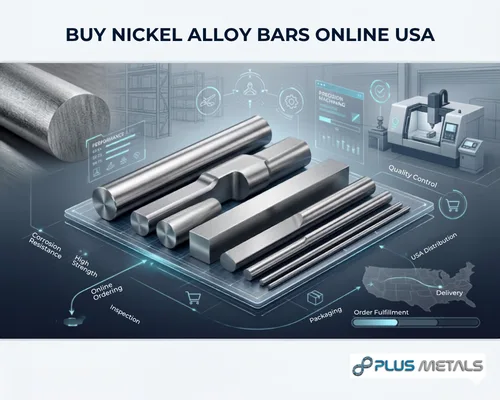
Nickel, titanium, and high-performance alloys are widely used in industries where strength, corrosion resistance, heat resistance, and long service life are important. These materials are found in chemical processing, oil and gas, power generation, aerospace, marine, pharmaceutical, and engineering applications.
When buying these materials, simply choosing the right alloy grade is not enough. The material must also meet the required quality and testing requirements. This is where ASTM standards become important. ASTM standards help buyers, engineers, manufacturers, and quality teams understand the required material grade, chemical composition, mechanical properties, dimensions, testing methods, and product quality.
Plus Metals, a trusted supplier of nickel alloys, titanium alloys, and high-performance alloys, understands that every industrial project has different material requirements. We offer a wide range of specialty metals for customers in India and international markets, with material availability based on project requirements.
What Are ASTM Standards?
ASTM stands for ASTM International, an organization that develops technical standards for materials, products, testing, and services. These standards are used across the world to help maintain consistent quality and performance.
For metal and alloy products, an ASTM specification may define important requirements such as:
- Chemical composition
- Tensile strength
- Yield strength
- Elongation
- Hardness
- Heat treatment
- Manufacturing process
- Product dimensions
- Inspection and testing
- Marking and certification
ASTM standards are especially important for critical applications where material failure can lead to equipment damage, production loss, or safety concerns.
ASTM Standards for Nickel Alloys
Nickel alloys are known for their excellent resistance to corrosion, oxidation, and high temperatures. They are commonly used in chemical plants, refineries, power plants, marine equipment, and other demanding environments.
Some commonly used nickel alloys include Nickel 200, Nickel 201, Monel 400, Monel K500, Inconel 600, Inconel 625, Inconel 718, Incoloy 800, Incoloy 825, and Hastelloy C276.
The required ASTM specification depends on the product form and application. For example, a nickel alloy plate may have a different ASTM specification from a nickel alloy pipe, tube, bar, or fitting.
ASTM Standards for Nickel Alloys help ensure that the supplied material meets the required chemical and mechanical properties. Depending on the application, buyers may also require inspection certificates and test reports to confirm compliance.
Before placing an order, it is important to confirm the alloy grade, product form, size, applicable ASTM specification, and testing requirements.
ASTM Standards for Titanium Alloys
Titanium is valued for its high strength-to-weight ratio, excellent corrosion resistance, and ability to perform in demanding environments. It is widely used in aerospace, chemical processing, marine, medical, and power industries.
Common titanium grades include commercially pure titanium grades and titanium alloys such as Grade 5, also known as Ti-6Al-4V.
ASTM Standards for Titanium Alloys cover different product forms, including plates, sheets, bars, tubes, pipes, forgings, and other components. These standards help define material composition, mechanical performance, manufacturing requirements, and testing.
Titanium selection depends heavily on the working environment. For example, commercially pure titanium may be suitable for certain corrosion-resistant applications, while Grade 5 titanium is widely selected when higher strength is required.
For international projects, buyers should always confirm the required ASTM specification along with the product dimensions and certification requirements.
High Performance Alloy Standards
High-performance alloys are designed for applications where standard metals may not provide sufficient performance. These materials can offer excellent resistance to heat, pressure, corrosion, wear, and demanding operating conditions.
Nickel-based superalloys, cobalt alloys, titanium alloys, and other specialty materials are often used in aerospace, energy, chemical processing, and high-temperature equipment.
High Performance Alloy Standards provide a common quality reference between buyers and suppliers. They help ensure that materials supplied for critical equipment meet the agreed technical requirements.
Depending on the project, customers may ask for material test certificates, heat treatment records, third-party inspection, chemical analysis, mechanical testing, or other quality documents.
Understanding Nickel Titanium Alloy Specifications
When sourcing specialty metals, the term "Nickel Titanium Alloy Specifications" can sometimes create confusion because nickel alloys and titanium alloys are separate material families with different properties and standards.
The correct specification should always be selected according to the actual material grade and product form. Important details may include:
- Alloy or grade
- ASTM specification
- Product type
- Size and thickness
- Quantity
- Heat treatment condition
- Surface finish
- Testing requirements
- Certification requirements
A clear material specification reduces the risk of receiving an incorrect product and helps ensure smooth project execution.
Why ASTM Compliance Matters When Buying Alloys
ASTM compliance gives buyers a clear technical reference when purchasing specialty metals. It also makes communication easier between engineers, procurement teams, fabricators, and suppliers.
For global projects, following recognized standards can also support quality control and customer requirements. However, ASTM is only one part of the purchasing process. Depending on the project, other standards such as ASME, API, EN, or customer-specific specifications may also apply.
The best approach is to share complete technical details before ordering. This allows the material to be checked against the required specification and application.
ASTM Alloy Standards Guide for Global Buyers
Choosing the right alloy requires more than searching for the lowest price. The correct combination of grade, ASTM specification, size, product form, and certification is important for long-term performance.
At Plus Metals, we support customers with nickel alloys, titanium alloys, and other high-performance materials for industrial requirements. Our team can help customers review their material needs and identify suitable options based on the requested specifications.
With a focus on quality, reliable sourcing, and international supply requirements, Plus Metals serves customers looking for specialty metals for demanding applications.
Whether you need nickel alloy round bars, plates, sheets, pipes, tubes, titanium products, or other high-performance alloy materials, sharing the exact ASTM specification and product requirements is the best way to receive accurate assistance.
Get a Quotation Now & Build the Relationship
Looking for ASTM-compliant nickel alloys, titanium alloys, or high-performance alloy materials?
Get a quotation now and build a long-term relationship with Plus Metals. Share your required alloy grade, ASTM specification, product form, size, quantity, and delivery location with our team. We will review your requirements and assist you with the right material options for your project.
Global Supply & Available in Stock
Material availability may vary by grade, size, and product form. Contact Plus Metals for current stock and supply options.
Contact Plus Metals
Plus Metals
Global Supply & Available in Stock
Phone: +91 91673 47029
Email: plusmetals85@gmail.com
Address:
Shop No. 2, Ground Floor, Jai SiddhiVinayak CHS Ltd (Durgadas),
Plot Nos. 13/13 A, Ardeshir Dadi “X” Lane,
C. P. Tank, Mumbai, Maharashtra 400004, India.
Get a quotation now and build a lasting business relationship with Plus Metals.
Frequently Asked Questions
Q1: What are ASTM standards for nickel alloys?
ASTM standards define technical requirements for different nickel alloy products. They may cover chemical composition, mechanical properties, manufacturing, testing, dimensions, and other quality requirements.
Q2: What are the ASTM standards for titanium alloys?
ASTM standards for titanium alloys vary according to the grade and product form. Different specifications may apply to titanium sheets, plates, bars, tubes, pipes, forgings, and other products.
Q3: Why are ASTM standards important for high-performance alloys?
ASTM standards provide a common technical reference for buyers and suppliers. They help ensure that materials meet agreed quality and performance requirements.
Q4: Can Plus Metals supply ASTM-standard alloy materials globally?
Yes. Plus Metals supports global supply requirements for nickel alloys, titanium alloys, and high-performance alloy materials. Availability depends on the required grade, size, product form, and quantity.
Q5: What information should I provide when requesting a quotation?
You should provide the alloy grade, ASTM specification, product form, dimensions, quantity, certification requirements, and delivery location. This helps the team review your requirement accurately.